
You’ve probably seen it on a spec sheet dozens of times. 1,800 MASL. 2,100 MASL. Sometimes it’s lower, sometimes higher. It sits alongside variety, process, and producer name — one of those data points that gets glanced at and filed away. But altitude is not background noise. It’s one of the most reliable signals we have for what a coffee is going to taste like, and understanding why makes you a sharper buyer, roaster, or consumer.
Let’s break it down.
What does MASL actually mean?
MASL stands for metres above sea level. It’s a simple measurement of elevation — how high the coffee farm sits relative to the ocean. Nothing more complicated than that. What makes it interesting is what that number tells us about the conditions the coffee plant grew in.
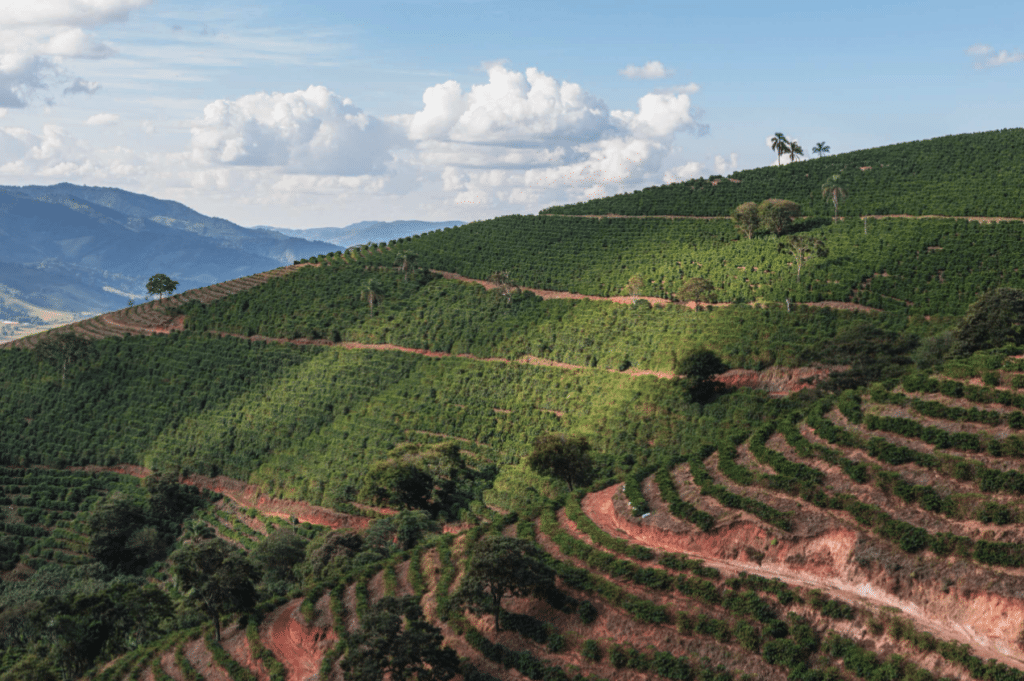
As elevation increases, temperature drops, air pressure decreases, and the plant’s environment becomes more challenging. Coffee plants respond to that stress in ways that directly affect the bean’s density, sugar development, and ultimately, the flavour in your cup.
Credit: Brazil Carmo Coffees
What actually happens at higher altitude?
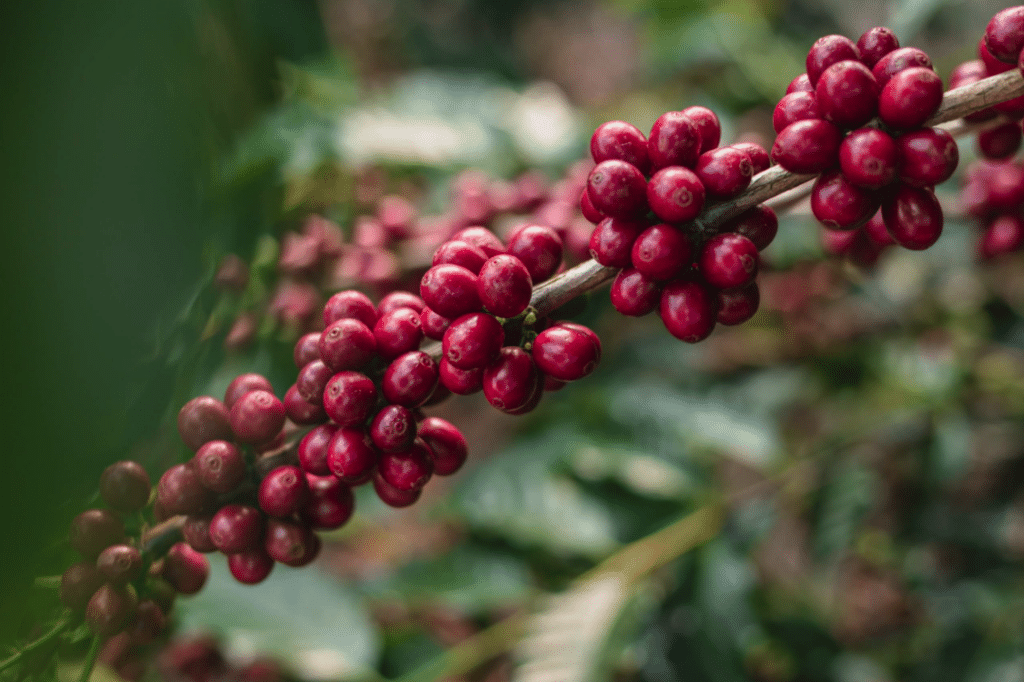
Good question. Here’s the short version: higher altitude means cooler temperatures, and cooler temperatures slow down the cherry’s maturation rate. Instead of ripening quickly, the cherry takes longer to develop. That extended development time allows sugars to accumulate more gradually, producing a denser bean with more complex flavour compounds.
Think of it like slow cooking versus a high flame. The result is fundamentally different. Higher altitude coffees tend to have brighter acidity, more pronounced aromatics, and greater cup complexity. Lower altitude coffees are often softer, less complex, and more prone to earthy or flat profiles.
Bean density is another outcome worth knowing about. High altitude beans are typically denser because of the slower development. Denser beans hold up better under heat in the roaster — they’re more forgiving and tend to have more material for the roaster to work with. Lower density beans require more care; too much heat too quickly and you risk scorching a bean that doesn’t have the structure to absorb it.
Is higher always better?
Not necessarily. Altitude is a strong indicator, but it’s not the whole picture. Variety, process, soil composition, microclimate, and the skill of the producer all play a role. A well-processed, well-handled coffee grown at 1,400 MASL can absolutely outperform a neglected lot at 2,000 MASL.
That said, when everything else is equal, elevation tends to win. It’s a reliable starting point — not a guarantee, but a strong signal.
It’s also worth noting that altitude means different things in different countries. Coffee grown at 1,200 MASL in Colombia is in a different climate context than coffee grown at 1,200 MASL in Ethiopia or Guatemala. Latitude, humidity, and proximity to the equator all influence how altitude plays out on the ground. A general framework is useful, but local context matters.
Credit: Brazil Carmo Coffees
A rough guide to altitude and what to expect
These are not hard rules — they’re tendencies. Use them as a framework, not a formula.
- Below 1,000 MASL: Often lower acidity, heavier body, earthier or more rustic flavour profiles. Common in robusta-producing regions. Perfectly suited for blends and espresso bases where body and intensity are the goal.
- 1,000–1,500 MASL: A transitional zone. You start to see more defined sweetness and some acidity coming through. Cup character becomes more interesting and better suited to single origin use, though complexity is still building.
- 1,500–1,800 MASL: This is the sweet spot for much of the specialty market. Bright acidity, clear fruit or floral notes, good structure. Many of the best lots from Ethiopia, Colombia, and Central America sit in this range.
- 1,800 MASL and above: High complexity territory. Distinct acidity, pronounced aromatics, layered flavour. These coffees are often where the highest SCA scores live. They can be more demanding to roast because of bean density, but the reward in the cup is significant.
Why does this matter for roasters and buyers?
Knowing the altitude of a coffee gives you a head start on understanding its roasting behaviour and its likely flavour potential. A dense, high altitude bean is going to need different treatment than a lower altitude lot. Heat application, development time, charge temperature — these decisions are informed by what you know going in.
For buyers, altitude is one of the first filters worth applying when evaluating a new lot or origin. It won’t tell you everything, but it narrows the field quickly. If you’re building a filter offering where clarity and brightness are the goal, you know where to start looking.
At Opal, it’s one of the data points we look at early in our sourcing process. Alongside variety, processing method, and producer background, altitude helps us build a picture of what a coffee should be — and then the cupping confirms whether it got there.
Credit: Brazil Carmo Coffees
The takeaway
MASL is not just a number on a spec sheet. It’s a proxy for temperature, maturation rate, bean density, and the conditions the plant was asked to survive. Higher elevation generally means more complexity, brighter acidity, and a more demanding but rewarding coffee to work with.
Next time you pick up a new lot, take a second look at that MASL figure. It’s telling you more than you might think.
If you have questions about any of the coffees we’re currently offering or want to talk through sourcing for a specific profile, reach out to the team.
USA: trade@opalcoffee.us
Basics of Coffee
Packaging Matters: GrainPro, Ecotact & Bulk Options
Does green coffee packaging actually affect cup quality? Short answer: yes. Here’s why it matters more than you might think.
