Basics of Coffee
Why the Same Coffee Can Taste Different Every Year
An honest conversation about harvest variation, and how factors like rainfall, temperature, and crop cycle affect what ends up in the bag.

You’ve sourced an exceptional lot. High altitude, meticulous processing, strong pre-shipment scores. You’ve done everything right. Then it arrives, and something is off. The brightness is muted. The aromatics are flat. The complexity you paid for has quietly slipped away.
Packaging is rarely the first thing people point to. But it should be part of the conversation a lot earlier than it usually is.
Green coffee is a living, breathing product. And what it’s packed in during transit and storage has a real impact on what ends up in the roaster — and ultimately, in the cup. Let’s break it down.
Why does packaging matter for green coffee?
Green coffee is sensitive to its environment. Temperature fluctuations, humidity, oxygen exposure — all of these interact with the bean and influence how it ages, how stable it stays, and what flavours survive the journey from origin to roastery.
Think of packaging as the last line of defence between the producer’s work and your roaster. A poorly sealed bag won’t undo a great lot overnight, but over weeks and months in transit or storage, the cumulative effect is significant. Moisture ingress, oxidation, and contamination from external odours are all real risks — and they’re all packaging problems.
So, what are the options, and what are the trade-offs?
GrainPro liners
GrainPro has become the industry standard for specialty green coffee, and for good reason. These hermetically sealed, flexible liners sit inside a standard jute or woven polypropylene bag and create a near-airtight barrier between the coffee and the outside world.
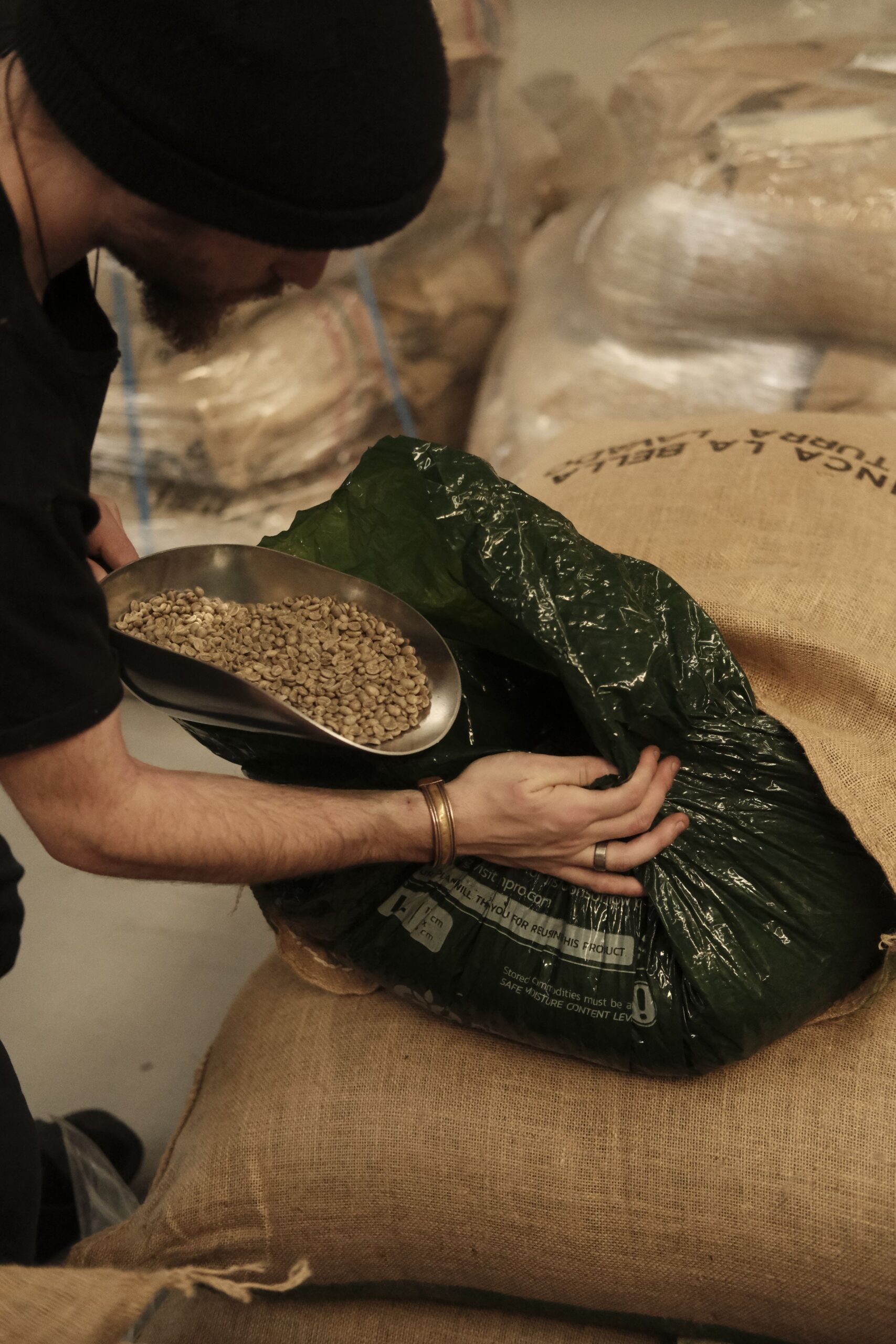
Photo Credit: Opal Coffee NZ
The seal prevents moisture movement in either direction, protects against oxygen exposure, and blocks external odours — a genuine problem when you’re sharing a container with other goods. GrainPro is particularly effective on long-haul shipments and in humid climates where traditional packaging would struggle.
The downside? Cost. GrainPro liners add to the price of every bag, and when you’re moving large volumes, that adds up. But weighed against the risk of quality degradation on a high-value specialty lot, most importers and producers consider it a non-negotiable.
If you’re buying single origin specialty coffee — particularly anything washed or with more delicate aromatics — this is the packaging you want to see on the spec sheet.
Ecotact bags
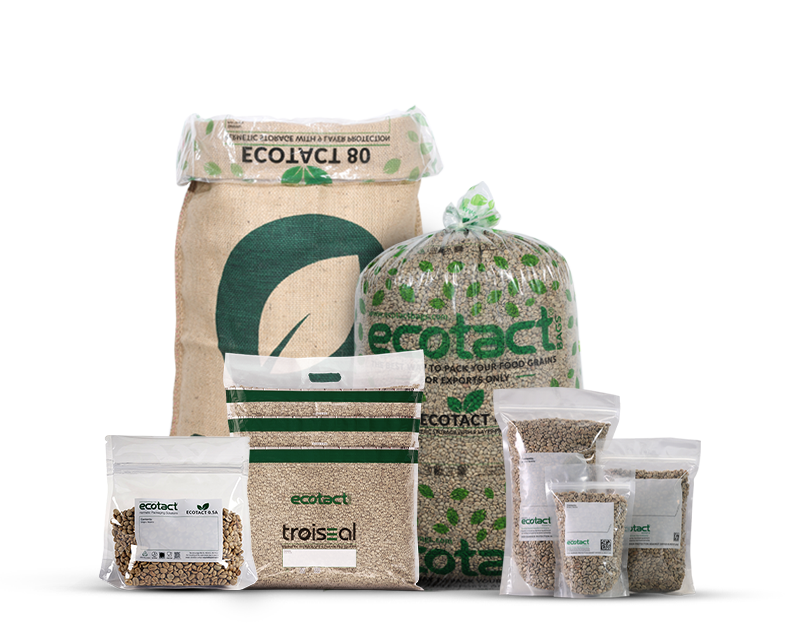
Ecotact is often mentioned alongside GrainPro as an alternative hermetic liner, and the two are similar in concept — airtight seal, moisture barrier, odour protection. The difference comes down to material composition. Ecotact bags are made with a biodegradable film, which gives them an edge from a sustainability standpoint.
Performance-wise, they’re comparable to GrainPro in most conditions. Ecotact has gained traction among producers and exporters/importers who are increasingly focused on their environmental footprint without wanting to compromise on quality preservation. If you’re working with origins that prioritise sustainability credentials across the supply chain, Ecotact is worth knowing about.
Along with gaining popularity among producers and exporters/importers, Ecotact is a popular choice for micro-roasters, and home roasters due to offering packaging solutions for as small a quantity as 100g green coffee beans.
Cost is similar to GrainPro, and the same logic applies: the investment is justified when the coffee inside is worth protecting.
Traditional jute bags
Jute is the original coffee packaging — breathable, biodegradable, and widely used across commodity markets for generations. And in certain contexts, it still makes sense.
The problem for specialty coffee is the breathability that makes jute appealing from a sustainability perspective is also what makes it risky for quality preservation. Moisture can pass freely through jute, meaning beans are exposed to humidity fluctuations throughout their journey. Extended transit times, wet climates, and poorly controlled storage can all accelerate quality loss in jute-packed coffee.
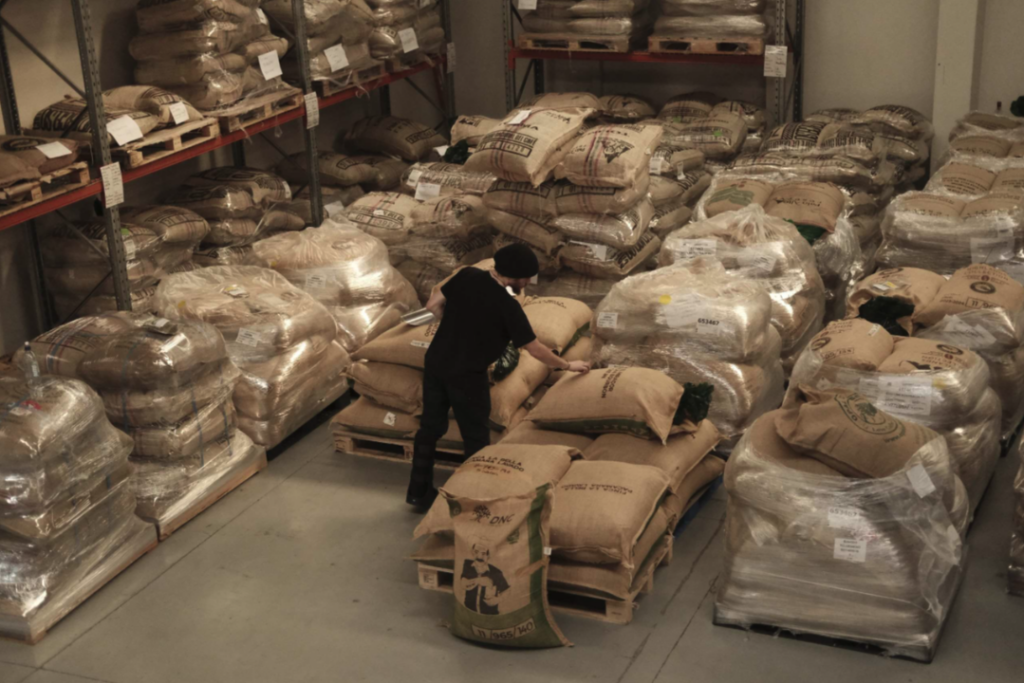
Photo Credit: Opal Coffee NZ
Jute also absorbs odours. If your coffee shares a container with anything aromatic — and containers are rarely dedicated — there’s a real chance it picks up unwanted notes.
For commodity grade coffee or short-distance, low-humidity shipments, jute is fine. For specialty lots with a long origin-to-cup journey, it’s a risk that’s hard to justify — particularly when better options are available at relatively modest additional cost.
Vacuum packaging
Vacuum packaging takes a different approach. Rather than creating a sealed environment, it removes the air entirely. Without oxygen present, oxidation slows dramatically, and the coffee is effectively locked in at a given point in time.
This makes vacuum packaging particularly effective for micro-lots, competition-grade coffees, and anything where maximum preservation is the priority. You’ll see it used for very high value offerings — the coffees that justify the additional handling and cost.
It’s worth noting that vacuum packaging changes the physical form of the bag, which can complicate stacking and logistics at scale. It’s not practical for bulk shipments, but for smaller, high-stakes lots, it’s one of the most reliable preservation options available.
Bulk super sacks
Bulk super sacks — large woven polypropylene bags typically holding 500kg to 1,000kg — are a cost-effective option for moving volume. You’ll see them used primarily for commodity coffee and larger commercial shipments where price efficiency is the priority over quality preservation.
The trade-off is significant. Super sacks offer minimal protection against moisture and oxygen, and the sheer volume of coffee packed together can create internal humidity issues, particularly if the coffee enters storage at anything other than optimal moisture content and water activity levels.
For specialty coffee, super sacks without hermetic liners are generally not recommended. The logistics savings are real, but the quality risk is substantial, especially over longer transit periods. Some importers use super sacks with an inner hermetic liner as a middle ground — improved protection at better cost efficiency than individual bag hermetic options — and this can work well if executed carefully.
Cost vs. risk vs. quality
Here’s a simple way to frame it:
The way we see it, if you’ve invested in sourcing quality coffee — whether that’s a traceable single origin, a carefully processed natural, or a competition-grade micro-lot — the packaging decision is part of that investment. Cutting corners there risks undermining everything that came before it.
As green coffee importers, this is part of what we manage on your behalf. It shapes which producers we work with, how we specify shipments, and how we store green coffee in-warehouse. It’s not a glamorous part of the supply chain conversation, but it’s a critical one.
If you’re unsure about the packaging on any lots you’re sourcing — or want to know more about how we handle green coffee through transit and storage — reach out to the team below.
USA: trade@opalcoffee.us
NZ: trade@opalcoffee.nz
AU: trade@opalcoffee.com.au
An honest conversation about harvest variation, and how factors like rainfall, temperature, and crop cycle affect what ends up in the bag.
High altitude, diverse microclimates, and a coffee culture built over generations. Colombia isn’t just an origin — it’s a category of its own.