
Basics of Coffee
Origin Deep Dive: What Makes Ethiopia’s Green Coffee Unique
Ethiopia is widely recognized as the birthplace of coffee, discovered by a goat herder named Kaldi during the 9th Century.


As we continue our series discussing processing methods, the next is carbonic maceration, a somewhat newer processing method that is gaining popularity.
Originally, carbonic maceration was a wine fermentation technique, but has found popularity among coffee producers within specialty coffee. Carbonic maceration has been used in winemaking since 1934 but really gained popularity in specialty coffee in 2015 by barista champion Saša Šestić. In wine, carbonic maceration is used to ferment grapes without breaking the skin by injecting carbon dioxide. The result is that the grape is fermented from inside, happening from an intracellularly level.
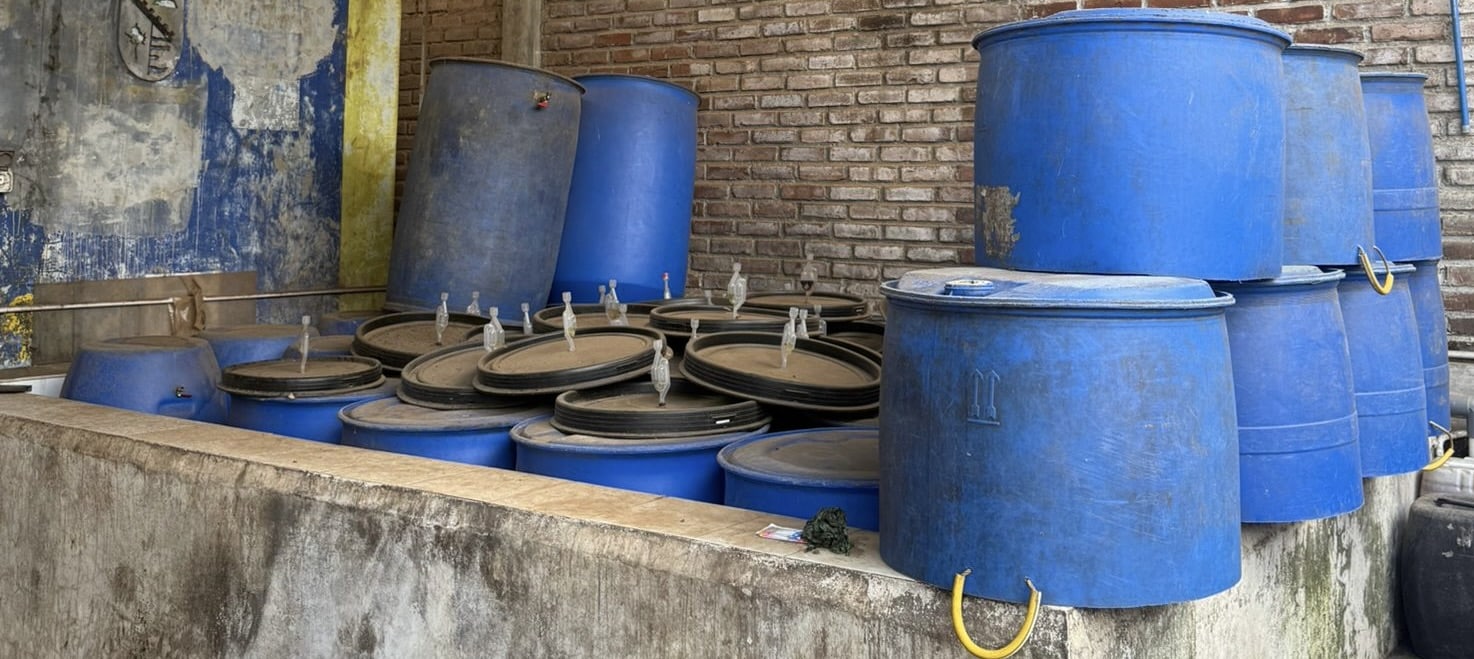
In coffee, carbonic maceration is a form of anaerobic fermentation which involves placing whole, not pulped ripe coffee cherries in a sealed airtight barrel, often stainless steel or plastic with a one-way valve, and allowing them to sit in an environment with low or no oxygen. The cherries are pumped with carbon dioxide to remove the oxygen. The one-way valve allows the pressure build-up to be released.
Depending on your desired result, the cherries can sit in this oxygen-free environment for months to achieve the desired flavour characteristics.

This process is temperature controlled and low temperatures make for a longer fermentation and are also used to avoid alcohol build-up.
Through the process of whole, not pulped cherries sitting in an anaerobic environment for a long duration of time, this causes a strong stone fruit quality in the cup, often intense flavours, boozy, and cooked fruit profiles. This is also the result of the flavours and aromatics created by carbonic maceration that have no way of escaping the environment, so the cherries absorb it, creating sweet or acidic profiles.
Natcha Coffee, where next generation experimental coffee is crafted with precision and passion. Using their signature Carbonic Maceration Fermentation process with various wine yeast, creating unique profiles. Natcha specialises in innovative processing using hand-picked coffee beans from Indonesia’s top growing regions.
The cherries are first selected with specific brix from a certain area around Mt. Papandayan. Then a dry thermal shock is done inside the drying dome.
The coffee is heated and dehydrated to 65 degrees celsius for 6 hours, until the cherry becomes a raisin.
The cherries are then soaked with a bit of water inside of the drying dome, during this time you can smell very interesting notes.
The coffee is then pulled to parchment. The parchment is covered, similar to vanilla bean curing, to keep the moisture stable for 24 hours.
The cured parchment is then put into the CM chamber with the yeast for 36-72 hours, while CO2 is injected every 3 hours.
After the CM chamber, the parchment is dried in the drying room to 38% where it is wet hulled, and the green bean is then moved back to the drying room and is dried to its final moisture level.
Varietals: Lini S795 / Sigararutang / Catura / Ateng Super
Altitude: 1,350 MASL
Process: Carbonic maceration for 36 hours with red wine yeast. The last 24 hours include the addition of lactobacillus.
Characteristics: Complex coffee with bright red fruit notes including cherry, raspberry, plum, and apple/pear. Layered with subtle wine-like acidity. Juicy, tropical fruit hints of mango and passionfruit, combined with gentle floral undertones. Smooth and balanced body.
Varietals: Lini S795 / Sigararutang / Catura / Ateng Super
Altitude: 1,450 MASL
Process: Carbonic maceration for 42 hours with white wine yeast. Lactic fermentation with lactobacillus added in the last 12 hours.
Characteristics: Complex cup bursting with juicy stone fruits like ripe peach and plum, layered with bright red fruits such as cherry and raspberry. Subtle citrus notes of orange and tangerine. Gentle floral undertones compliment the fruit, while its medium body and smooth, wine-like finish create a balanced cup.
Varietals: Lini S795 / Sigararutang / Catura / Ateng Super
Altitude: 1,450 MASL
Process: Carbonic maceration for 36 hours with red wine yeast. Lactic fermentation with lactobacillus added in the last 10 hours.
Characteristics: Vibrant red fruits cherry, plum, raspberry, and strawberry with notes of melon. Medium body is smooth and juicy, with a clean finish.
These high scoring carbonic maceration lots are available in AU and then available in NZ in a couple of weeks. For more information, please email the corresponding office below:
Ethiopia is widely recognized as the birthplace of coffee, discovered by a goat herder named Kaldi during the 9th Century.

Imagine securing incredible high quality specialty lots, shipping them, only to find upon arrival, after cupping, they are sitting a few points below your initial scores based on pre-shipment samples. This could likely be due to water activity being too high.
