Basics of Coffee
Understanding Coffee Processes: Carbonic Maceration Explained
As we continue our series discussing processing methods, the next is carbonic maceration, a somewhat newer processing method that is gaining popularity.

We receive a number of samples and because of this, it is important to assess that there is consistency and we are receiving what we are expecting.
Offer Sample: A sample supplied by the producer, cooperative, or exporter to offer a particular lot of coffee.
Pre-shipment Sample (PSS): A sample that is representative of the coffee that is being loaded onto the ship. This sample is blended from each bag in a lot to represent the coffee.
Arrival Sample: Representative sample taken from coffee after it has landed in the warehouse.
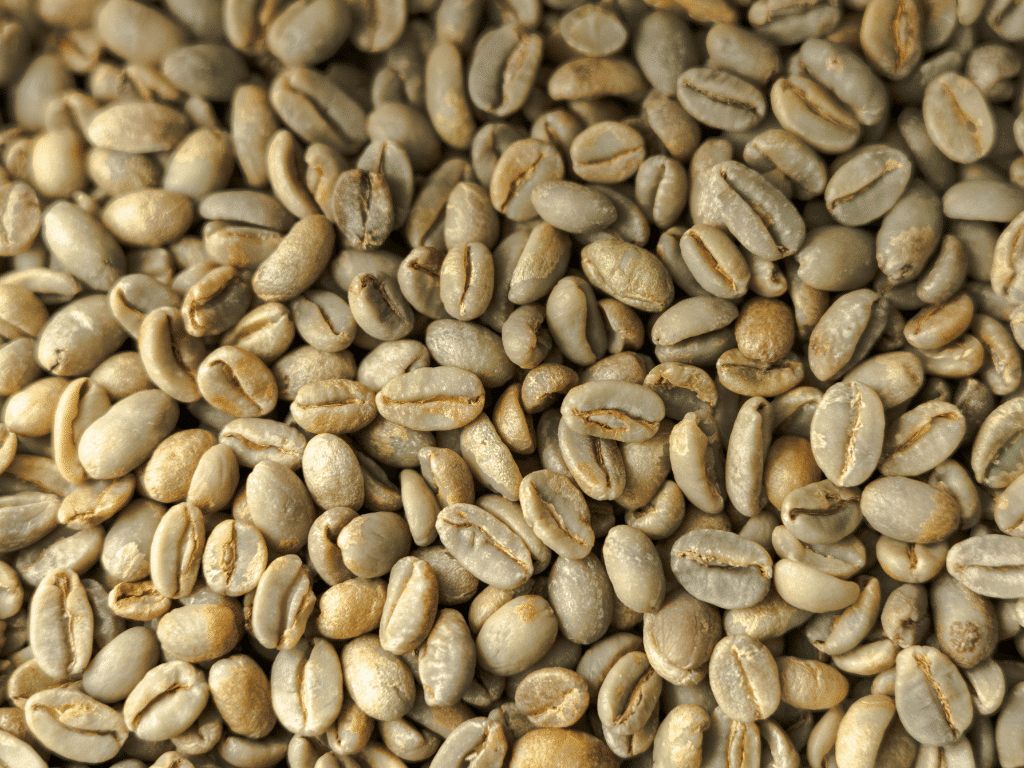
Although there are some clear defects, fungi, broken beans, and those inflicted by insects which can be easily identified unroasted, some defects such as “quakers’ can only be properly detected after roasting. This is where sample roasting is vital for samples we receive.
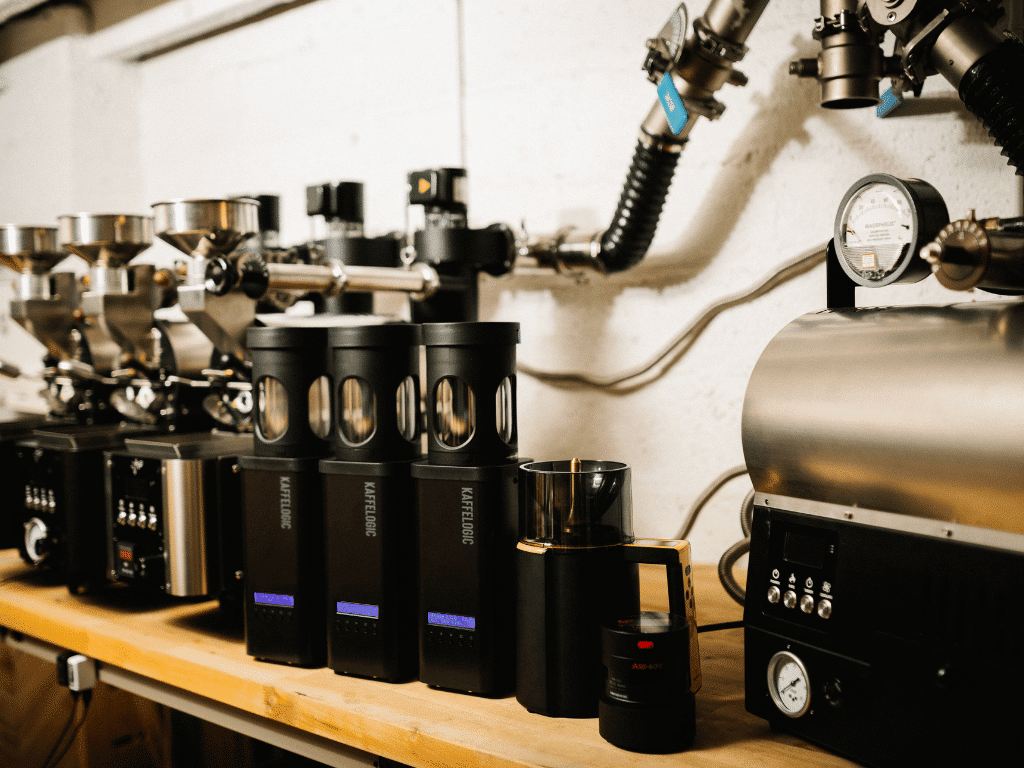
Often, we only receive around 200g-500g green from origin. Sometimes even less. Sample roasting allows us to roast as little as 50g-200g at a time using the Kaffelogic. This allows us to do a few sample roasts for ourselves to assess quality, flavour, and potential, as well as allowing us enough green coffee for a small sample roast for potential customers.
The next stage is the assessment of the roasted coffee. This involves sample roasting, visually inspecting the roast, and then moving on to cupping.
Many people associate cupping with the assessment of coffee and while this is a factor in the process, sample roasting has to occur first before cupping. Once roasted and left to degas for a minimum of 8 hours, we are able to carry out our cupping to help evaluate the beans’ characteristics, such as aroma, flavour and consistency.
Without sample roasting, we are unable to effectively assess inbound samples.

For green importers, sample roasting is a crucial part of the sale and purchase of green coffee. It helps us evaluate each lot, highlighting the coffee’s potential, helps identify flaws and unique attributes that might not be visible when the bean is still green.
As green importers, we cannot base buying decisions on solely green samples.
Sample roasting is not only crucial for importers, but also any specialty coffee roaster. It is a means for roasters to conduct their own evaluations and assessments on new lots. Often roasters prefer to roast their own samples to a specific profile and if this is the case, it is best that they roast themselves.
We had criteria to meet before choosing a sample roaster. It is important for us to choose a roaster that has a range of batch sizes and the Kaffelogic offers as little as 50g up to 200g green with the Boost Kit. This is ideal for us especially when we have big sample roasting days for customers.
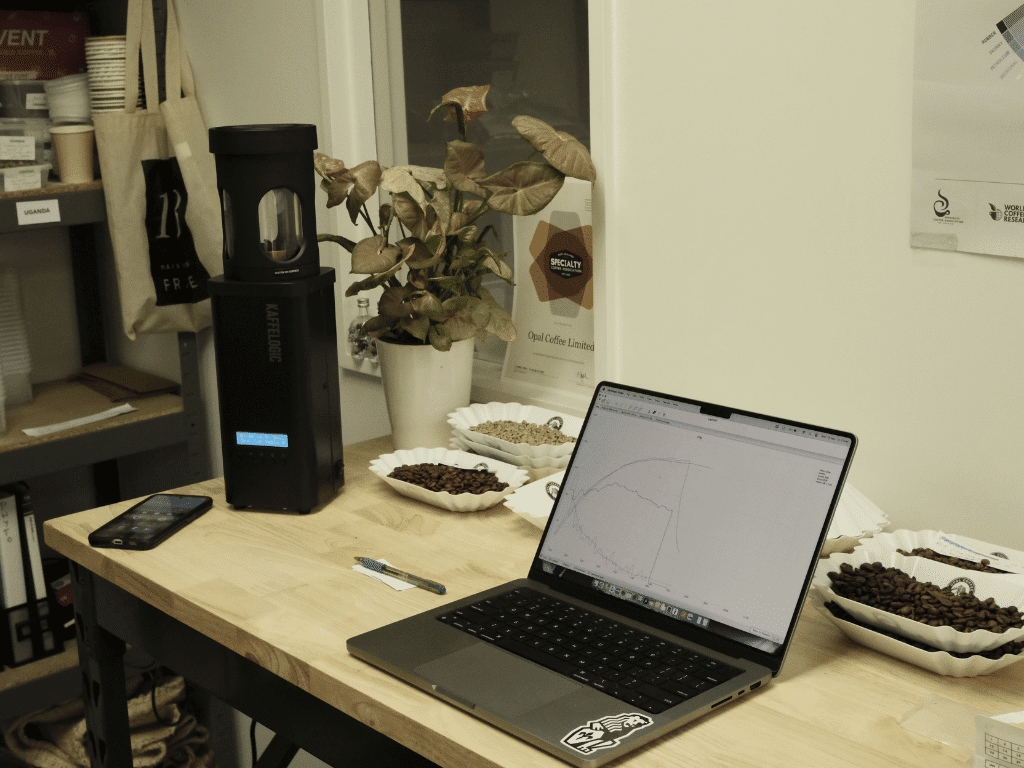
We roast based on altitude and process because our aim is to ensure we showcase the qualities of each coffee accurately. Kaffelogic makes this seamless with all of our profiles saved to the unit, making the profile change quick and easy. Altitude and processing methods play a big part in coffee roasting so it’s important to us to make these changes.
Kaffelogic Nano 7 has been a breeze to say the least, offering consistency with every roast. The small footprint of the Kaffelogic is a positive for us because it can effortlessly sit on a bench and avoid being in the way, especially in a working warehouse/office.
Because Kaffelogic sample roasters have Wi-FI connectivity, we can see a live view of our roasting log and allows us to save, and share our roasting profiles throughout our offices. It is perfect for anyone with any level of experience, from beginner home roasters, to experienced specialty coffee roasters.
One of the biggest draw-cards for us in New Zealand is that Kaffelogic is manufactured right here in Dunedin, New Zealand.
We had the chance to talk to Sean, Head of Coffee at Kaffelogic and ask some questions.
Opal: Where has Kaffelogic found the most success and why?
Sean: Kaffelogic has found most of our communal success in the home sector, providing a platform for keen roasters at home as an entry point in roasting their own coffee. From a quality standard, we have found the most success on the World Brewers Cup stage with Carlos Medina winning in Greece 2023.
Opal: Is the Kaffelogic popular with producers and why?
Sean: The Nano 7 is a very compact roaster that provides clean and easy results when working with new samples. It helps that the unit is very accessible, lowering the barrier to entry for producers to evaluate their own work. In some cases producers don’t receive much if any feedback on their coffees, the Nano 7 steps in as an option to assist them in getting instant feedback on the harvest.
Opal: What makes Kaffelogic stand out from other sample roasters?
Sean: The quality of the roast of Kaffelogic, for its size and price is a definite standout. The versatility of Studio and the amount that you can customize your profile to accommodate and overcome any challenge when roasting coffee.
Opal: Why is it important to roast based on coffee altitude and process?
Sean: Coffee trees that are grown in different regions, altitudes and climates all have different levels of volatile compounds, sugars, and acids. These all affect how the coffees react in the roasting process, and therefore, the taste. When we add processing into the mix, this impacts on the sugars and varieties of flavour compounds. Being able to roast for all of these factors is key for getting a great roast for your specific coffee.
Opal: Could you please give us some technical insight about the coffee roasting process such as how different roasting techniques impact flavor, aroma, and consistency?
Sean: All factors in roasting can affect the final cup, from time, to temperature, to airflow. It truly is a mix of these that can provide vastly different results in the cup, even with the same coffee. Roasting a coffee to the same end temperature, but over a longer time allows for a longer exposure to the heat and typically leads to lower present acidity, more body, more depth in that body and can sometimes allow the heavier flavour compounds to shine through more. Roasting for a shorter time to the same end temperature, can highlight the acids more, leading to a lighter and brighter tasting cup. This typically allows for those lighter flavour compounds to shine through usually leading to more fruit forward flavours in the cup.
Coffee and especially coffee roasting is a long and fun journey of experimentation and exploration, my final piece of advice is to enjoy the process and to to have fun during the journey. Focus on one variable at a time and learn what that changes in the cup.
You can check out Kaffelogic and can find your nearest distributor here: https://kaffelogic.com/
As we continue our series discussing processing methods, the next is carbonic maceration, a somewhat newer processing method that is gaining popularity.

Imagine securing incredible high quality specialty lots, shipping them, only to find upon arrival, after cupping, they are sitting a few points below your initial scores based on pre-shipment samples. This could likely be due to water activity being too high.
