Basics of Coffee
Why the Same Coffee Can Taste Different Every Year
An honest conversation about harvest variation, and how factors like rainfall, temperature, and crop cycle affect what ends up in the bag.


Ever wondered what water activity is in relation to green coffee? Let’s talk about it.
Imagine securing incredible high quality specialty lots, shipping them, only to find upon arrival, after cupping, they are sitting a few points below your initial scores based on pre-shipment samples. This could likely be due to water activity being too high.
Technically, water activity refers to the ratio between the vapor pressure of water with a material and the vapor pressure of pure water, measured under the same temperature and standard conditions.
Water activity (aw) measures the availability of free moisture in a product. In this case, green coffee beans. Different to moisture content which tells us how much water is present overall, water activity measures how active that water is. If it is too high, the green coffee can grow mould or start to degrade quicker. If it is too low, there is risk of the coffee being flat with limited flavours when roasted.
Water activity is generally measured as a value between 0 and 1, where 0 is too dry and 1.0 refers to pure water, with an ideal water activity below 0.6. When the water activity sits higher, you risk inviting microbial growth and chemical instability. However, if water activity is too low (0.45), the coffee can lose life, beans can go brittle, and flavour fade.
Water activity is a crucial step in the drying process ensuring that the beans achieve the optimum quality, stability, and flavour.
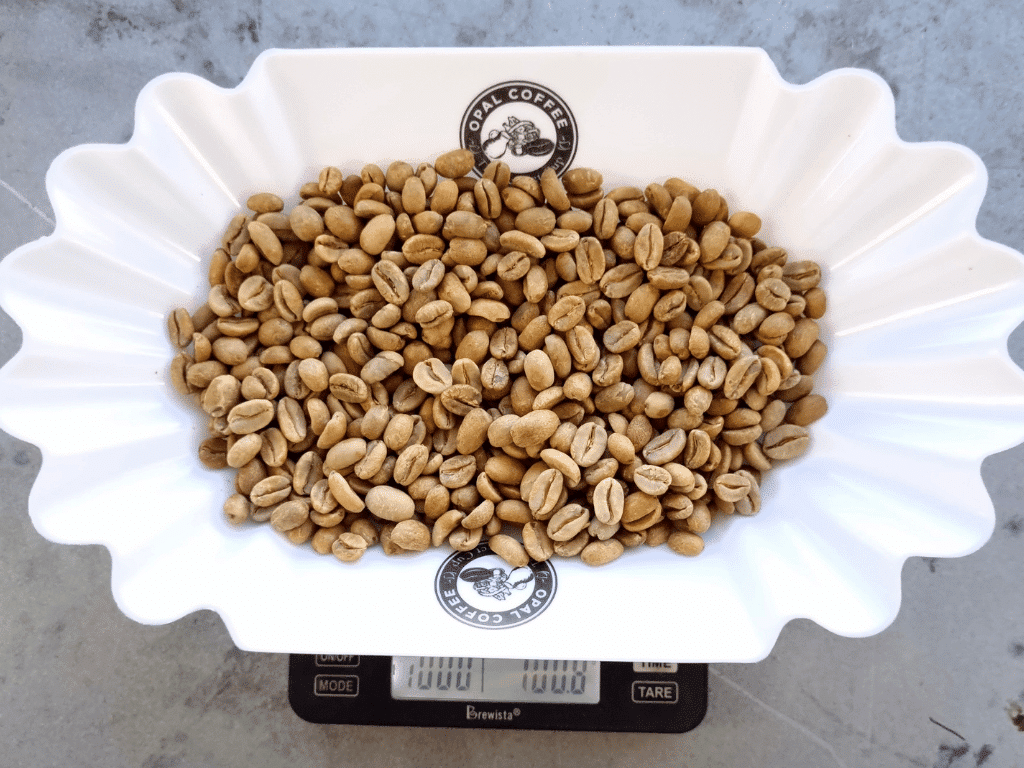
No, water activity is not the same as moisture content. Moisture content refers to how much moisture there is inside your coffee. Water activity indicates how likely that water is to result in further transformations, such as fermentation and mold.
Moisture content measures the amount of water that is inside your beans. As a rule of thumb, generally you want your coffee to have a moisture content of 10-12%. This is also an important reading to monitor because just like water activity, if the moisture content is too low (under 10%), it can result in a flat or lifeless coffee. If the moisture content is too high (above 12%), this means your bean is too moist, increasing the risk of mould or fermentation.
It is important to properly manage water activity because even if mould does not occur, unstable water activity can possibly cause a reduced shelf life for green coffee.
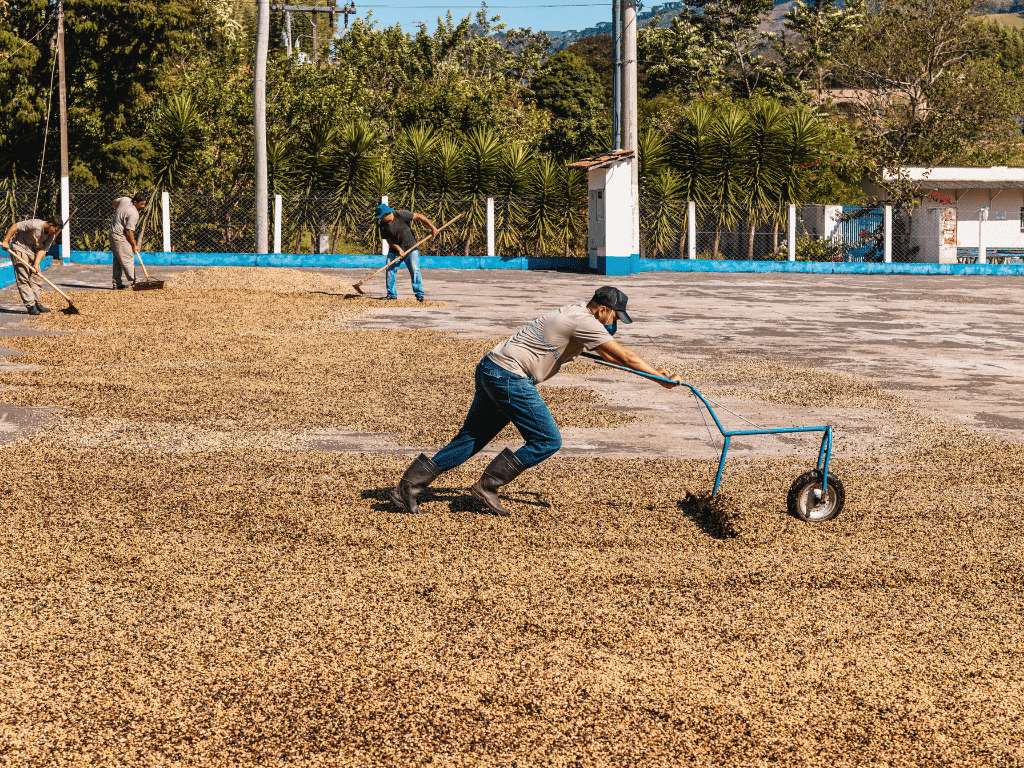
Photo credit: CarmoCoffee Beneficio Pedra Branca
Good question. This may seem out of the scope for many but it is important for producers, exporters, green coffee importers and even some roasteries. Primarily anyone who is involved in the quality control and handling of green coffee through drying, transit, and storage. It would be particularly useful for roasters to use if they plan to store green for extended periods of time to help with troubleshooting quality issues.
The ideal water activity range for green coffee is between 0.45 and 0.55 aw. During the drying stage of green coffee processing, as well as throughout its storage, it is crucial to reach and preserve the optimal water activity level to keep the green coffee stable and prevent quality degradation.
An honest conversation about harvest variation, and how factors like rainfall, temperature, and crop cycle affect what ends up in the bag.
High altitude, diverse microclimates, and a coffee culture built over generations. Colombia isn’t just an origin — it’s a category of its own.