Basics of Coffee
Packaging Matters: GrainPro, Ecotact & Bulk Options
Does green coffee packaging actually affect cup quality? Short answer: yes. Here’s why it matters more than you might think.
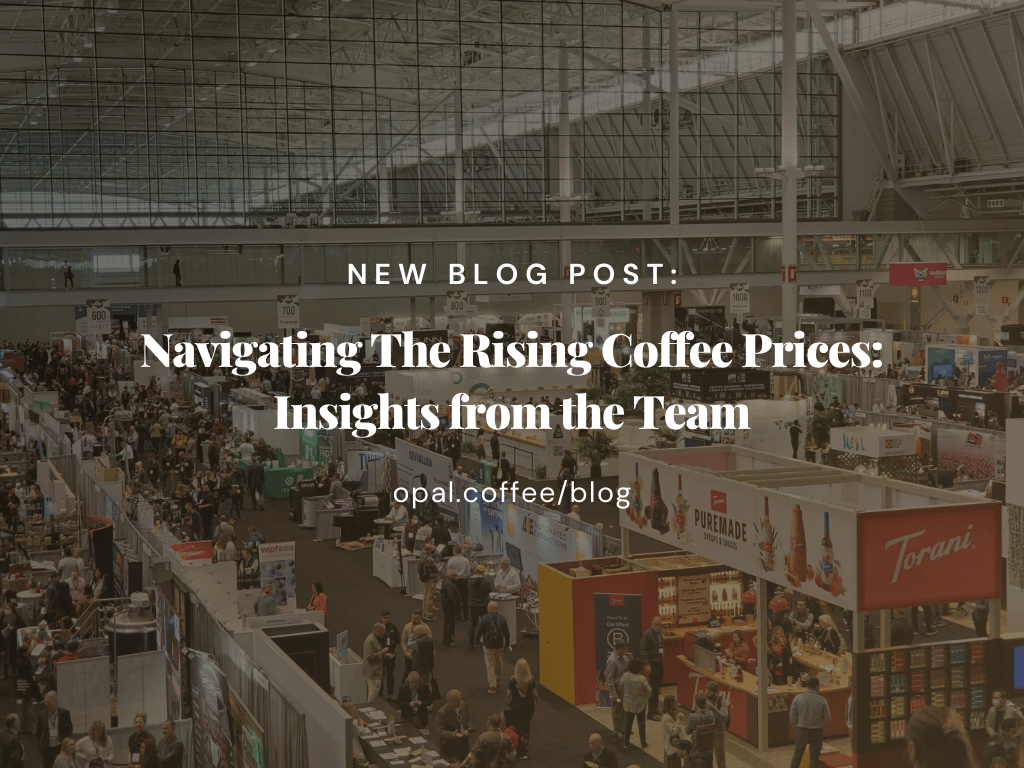
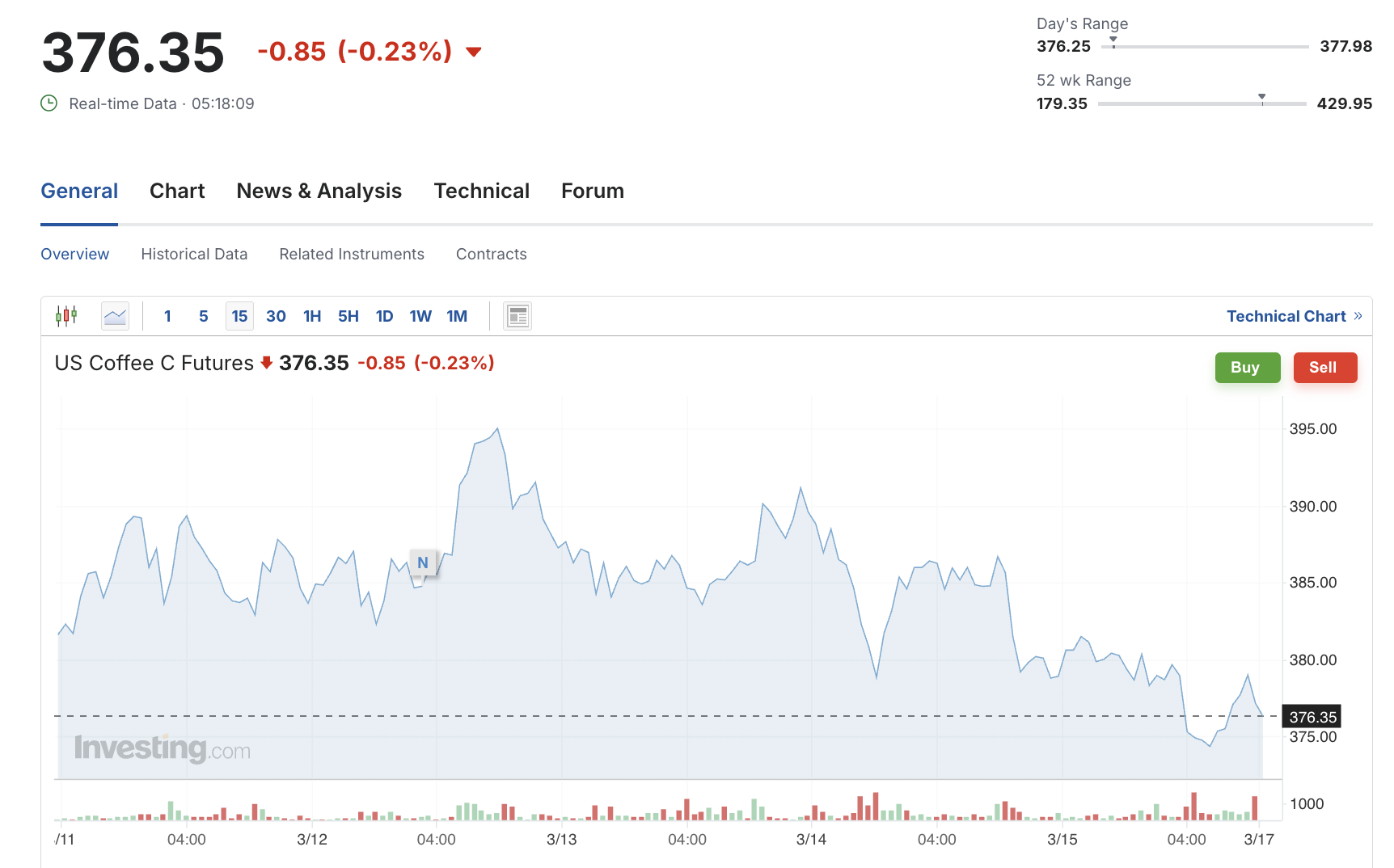
If you are in the coffee industry, no doubt you are keeping tabs on what is going on at the moment. We are currently in uncharted territory with the Arabica futures market hitting over US $4.30/lb last month, the highest since 1977, marking a 47-year high.
Because coffee is at an all time high, we feel that it is important to talk about.
Coffee is a commodity and is traded, like many other commodities, on the New York stock market. In fact, coffee is one of the most traded commodities in the world, but how does coffee pricing work?
Good question. A quick and simple overview is that the C-market (commodity market) is there as a baseline for green Arabica coffee. It is measured in USD/lb and because coffee is a commodity, many factors impact and continue to push the price of coffee. Some important global factors such as climate and weather related issues in Brazil and Vietnam, supply and demand, labour shortages, and shipping and ocean freight increases.
Let’s break this down a little more to understand the rising coffee prices.
Brazil and Vietnam are two of the largest producers of coffee.
Back in 2021, Brazil harvest was 25% down from 2020 and Brazil experienced some extreme frost with temperatures as low as -1.2 degrees celsius. This damaged a lot of the young plants and now we are seeing a flow on effect. Brazil accounts for 40% of global Arabica coffee production however, the 23/24 harvest was up 3 million bags from the previous year.
In 2024, Vietnam experienced extreme heat coinciding with one of the worst droughts in a decade which had delayed harvests, putting further strain on global supply chains. The vast majority of coffee produced in Vietnam is Robusta which is commonly used in instant coffee.
Jason from Opal Coffee Brisbane weighed in:
“Generational change. In many producing countries, there are 2 pressures adding to a decrease in the number of coffee farms. Firstly, as land becomes more valuable, many farmers are selling land for development, housing, tourism, and industry. A farmer can make 15+ years profit in a single transaction by selling their land. Secondly, education. The current generation of farmers are getting overseas based education and many of them see that there is not enough of a future in farming. Lastly, crop diversification. There are now many more crops that are both more stable and valuable than coffee. In east Africa, many farmers have pulled up coffee trees to plant crops like Macadamia which not only has multiple harvests a year, but are less susceptible to weather events.”
Climate change is expected to make weather events more difficult for the industry.
Demand for coffee has been increasing faster than production for a number of reasons:
Challenges such as container shortages, congestion in ports, the Red Sea crisis, port strikes, and labour shortages, are all causing delays and have also added to the rising coffee prices.
Global supply shortfall is a primary concern in 2025 from reduced production but high demand. The global demand for coffee has increased however the production has decreased.
Logistics issues due to the global supply chain during and after the Covid pandemic have added further strain.
We had the opportunity to ask Jason from Opal Coffee Brisbane a few questions.
Are we likely to see the price drop or stabilize?
Jason: It would be great to know the answer to this question. For the price to drop significantly we need to see one of two things. An extreme increase in supply or an extreme decrease in demand. Neither of these things seem likely to the extent that the price will be dramatically changed. The good and bad thing about coffee is that the harvest is fairly predictable a long way out. The upcoming harvest in Brazil is already on the trees. We predict how much coffee there will be 9 months out when the flowers turn to green cherries. While high prices may see some change in consumer habits, it is unlikely that people will just stop drinking coffee to the extent of a demand shift of 20%.
Jason: My first advice to everyone is to make sure you are covered. Importers will not be able to hold spot positions like they could a year ago. For importers, the cost of coffee has doubled in the past year. This means that we need twice as much cash to purchase coffee and our finance costs have also doubled. What this means for roasters is that importers may not be able to hold coffee for as long as they could before, and importers may not be able to buy unsold or spot coffee like they used to. Roasters need to plan ahead and be prepared to make tough decisions. Ask yourself what is worse, having no coffee or having coffee that you might have paid a little too much for?
My second piece of advice is to look at how origins change value as the market changes. Ethiopia and Indonesia both have internal price regulations and have not seen the same increase in costs as origins that purchase against the C price. This is not to say these origins are cheaper, however they are a little more resilient to fluctuations. Also look at harvest cycles, when can you buy coffee and have it for shorter periods of time before swapping to the next harvest. Holding coffee is expensive now, think about buying more seasonally and which origins are interchangeable.
My last piece of advice is around value. As the market goes higher, the better quality coffees are less expensive relative to the cheaper coffees. When the market was $2, the price difference between an 80 to 84 point coffee was 18%, in a $4 market it is only 9%. There is a huge difference in quality between those two coffees.
Jason: It means uncertainty, we cannot predict or rely on predictions to tell us what to do. It will be very tough for a lot of people but it is a good time to work out where your strengths and focus should be. If coffee is expensive are consumers going to drink less coffee? Probably not…. Are they going to buy less coffee at cafes? Maybe. What makes your business and product stand out from the rest? I think unfortunately a lot of businesses won’t survive the next 12-24 months. It’s not just the cost of coffee, it’s all the increased costs everyone is facing.
The surge in the c-market has continued to rise with the ongoing issues with climate change, supply demand issues, geopolitical events and economic instability, volatility in the c-market is expected to continue with uncertainty in whether we are likely to see the market stabilize soon or not. This will remain difficult to navigate but it is important to understand that cheap coffee is not good coffee.
Does green coffee packaging actually affect cup quality? Short answer: yes. Here’s why it matters more than you might think.
You’ve seen the terms on bags, menus, and green coffee offerings. Single origin. Blend. Microlot. They get used a lot and sometimes interchangeably